November 5, 2026 · 4 min read
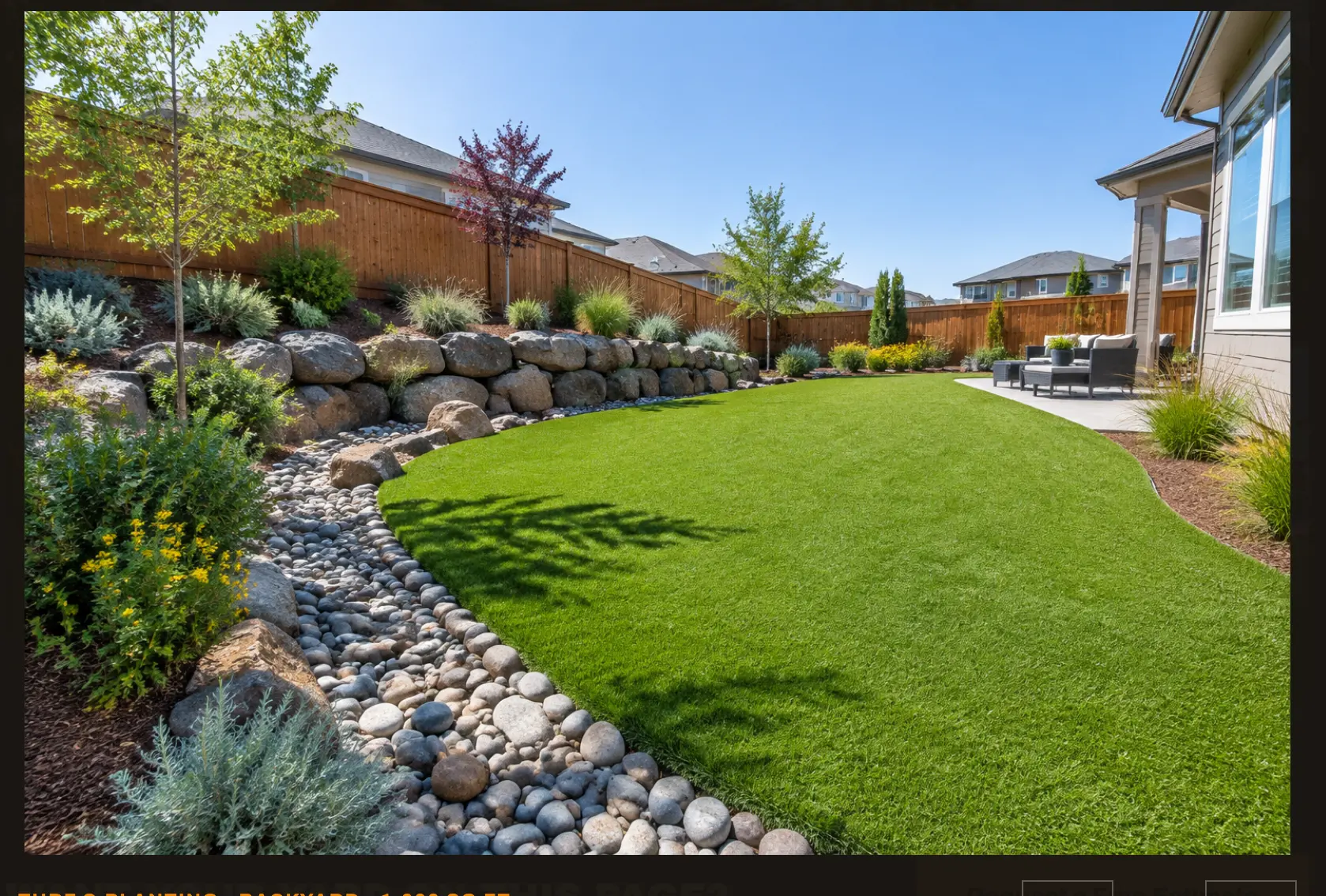
Turf earns its place where grass will not grow, where traffic kills a lawn, or where you want green without the watering. It is not a maintenance-free surface, and the yards that look bad in year three usually had a base problem in week one.
Where it makes sense
Shaded strips under mature trees, high-traffic paths, dog runs, and pool decks where sand and grass clippings are a nuisance. If your yard is open, flat and already grows grass well, turf is a preference, not a fix.
Base prep is the whole job
The surface only looks as good as what is under it. Excavation to the right depth, compacted aggregate, and a slope that carries water away are what stop dips, ruts and puddles. Skipping compaction is the fastest way to a lawn that looks wavy after one winter.
Heat and color
Turf in full afternoon sun runs warm. A lighter blade color and a bit of shade from a pergola or tree make a real difference on a July afternoon. Infill choice affects firmness underfoot and how much heat the surface holds.
The upkeep that matters
Brush the pile to keep blades upright, rinse pet areas, clear leaves before they mat down, and check the edges where turf meets planting beds. Ten minutes a month keeps the look; skipping it is what makes turf look tired.
When grass or pavers are the better call
If you want a cool surface for bare feet, real grass or a shaded paver area beats turf. If the space is mostly a walkway, paving lasts longer and stays cleaner. Turf is best where it solves a specific problem.
Want this figured out for your yard?
Tell us what you are planning and we will walk the space with you.