November 26, 2026 · 4 min read
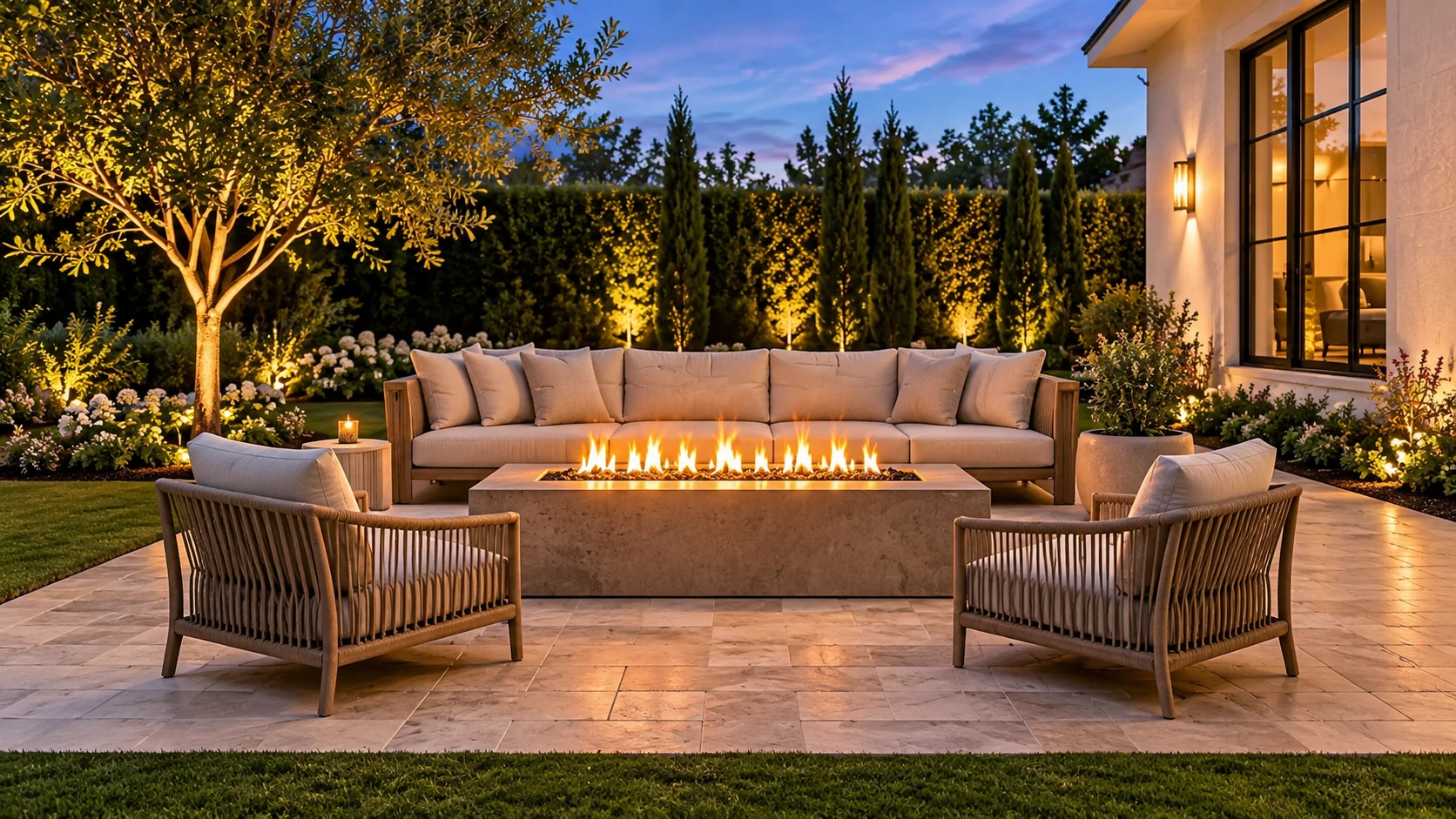
A fire pit is the one feature people gather around without being asked, so it earns its cost. The planning that matters happens before any stone is set.
Gas or wood
Gas lights with a switch, gives no smoke or ash, and can be wired to a wall switch or a remote. Wood gives the crackle and the campfire smell, but you deal with ash, sparks and a wood pile. Most San Diego backyards near a covered patio go gas.
Size and seating layout
A pit that works for four people is usually 30 to 48 inches across, with seating 18 to 24 inches from the flame edge. Build the seating circle in your head first, then set the pit in the middle of it, not where the existing patio happens to be.
Built-in seat walls
A low free standing wall around the pit gives permanent seating and defines the space. It also hides the gas line and the base work.
Clearances and rules
Distance from the house, overhangs, fencing and planting all matter, and some HOAs and cities have their own rules on flame height and fuel. Confirming that before the base is poured avoids an expensive move later.
What we plan with you
Fuel type, pit size, seating layout, lighting around the area, and how the pit connects to the rest of the patio.
Want this figured out for your yard?
Tell us what you are planning and we will walk the space with you.