November 18, 2026 · 4 min read
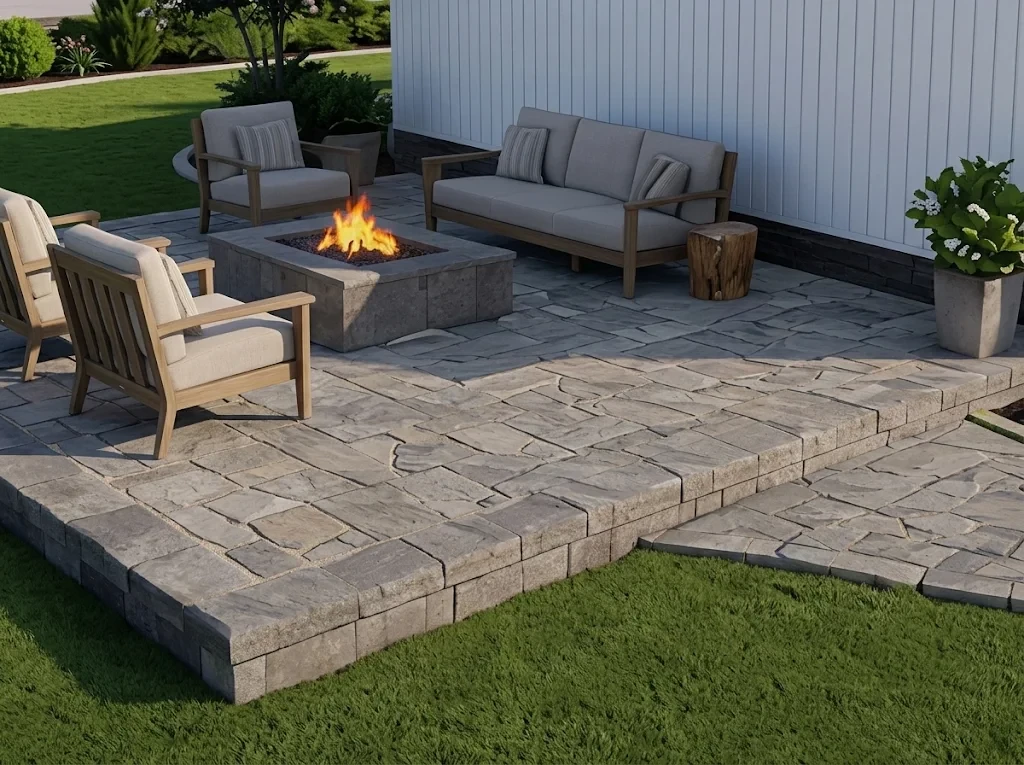
In San Diego both options hold up well, so the decision is rarely about climate. It is about use, drainage and what you expect to change later. A patio that gets a grill, a fire pit and a dining table every weekend behaves differently from a slab that mostly gets walked across.
How the space gets used
Pavers give texture and color variation, and the joints soften the look of a large area. Concrete gives a smooth, continuous surface that is easy to sweep, roll a bike across, or set a heavy table on. If you plan to move furniture often or host big groups, the flat surface wins on practicality.
Drainage and slope
Our dry summers end with hard rain, and that is where surface choice matters. Pavers laid on a compacted base let water move through the joints, which helps on lots that already drain slowly. Concrete sheds water, so it needs to be sloped away from the house, and sometimes a drain or a swale is the honest answer.
Repairs and future changes
If you think you will add irrigation lines, a fire pit or an outdoor kitchen later, pavers can be lifted and reset. A cracked concrete slab is patched or, in a bad case, cut out and replaced. Neither option is wrong, but one is easier to revise.
What actually drives the cost
Excavation, hauling, base prep and access to the backyard decide most of the price. The surface itself is a smaller share than people expect, which is why two similar patios can quote far apart. Ask what is included in prep before comparing material prices.
What we look at first
Slope and where water currently goes, how close the house and property lines are, existing irrigation lines, and any HOA rules on materials or height. Those four answers usually pick the surface for you.
Want this figured out for your yard?
Tell us what you are planning and we will walk the space with you.