October 22, 2026 · 5 min read
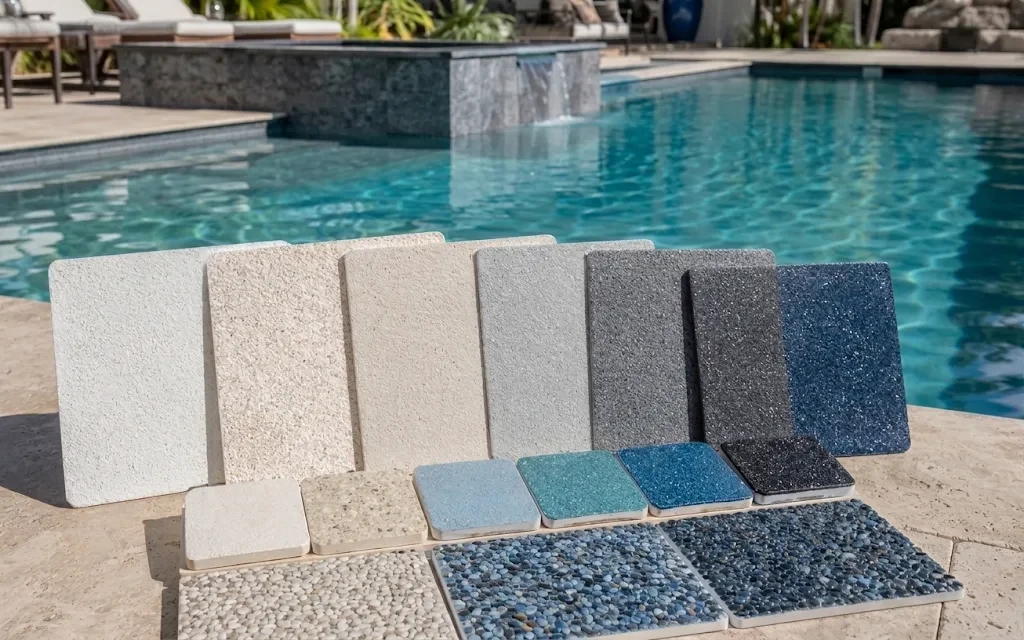
Plaster, coping and tile all meet at the pool edge, so a decision in one of them changes the other two. Planning the three together avoids the most common remodel problem: a new finish installed around old edges that no longer match.
Plaster
This is the interior surface you actually swim on. Standard marcite, quartz-based finishes and pebble surfaces differ in texture, color depth and how long they hold up. Color choices look different underwater than on a sample card, so it is worth seeing the finish wet before deciding.
Coping
Coping caps the pool edge and is what you sit on and step over. It can be removed and replaced, or in some cases set over existing coping. Material choice, natural stone or porcelain or concrete, affects both the look and how the edge feels underfoot.
Tile
Waterline tile, step tile and spa tile are the decorative layer, and also the part that takes the most sun and chemical exposure. Slip resistance and grout quality matter as much as the pattern. If only one area gets tile, waterline is usually the highest-impact choice.
What adds weeks
Waiting on stone or tile shipments, limited backyard access for equipment, and deck work that has to be scheduled around the plaster cure. Confirm material lead times before the start date, not after.
How to plan it
Decide the finish first, then the coping that frames it, then tile as the accent. That order keeps the budget flexible: if something has to move, the accent is the easiest piece to trim without redoing the work below it.
Want this figured out for your yard?
Tell us what you are planning and we will walk the space with you.