November 26, 2026 · 4 min read
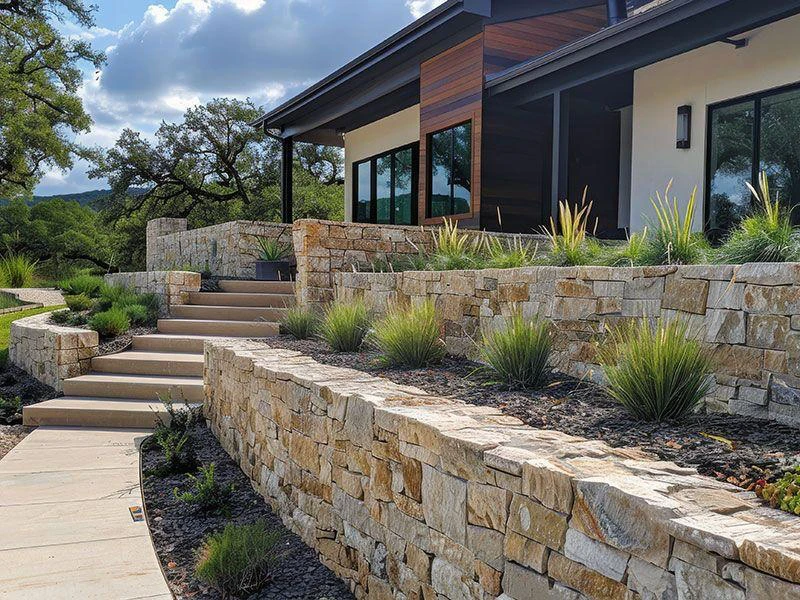
A retaining wall holds soil back. A free standing wall just stands there. That one sentence decides how much excavation, drainage and engineering each job needs.
Retaining walls
Anything that holds a change in elevation needs a base wide enough to resist the pressure behind it, drainage gravel and a drain pipe behind the wall, and often geogrid once the height climbs. On San Diego hillside and canyon lots this can push a wall into engineering and permit territory, so height and location get checked before the first block is set.
Free standing walls
Seat walls, garden walls and borders do not retain soil, so the base is simpler and both faces can be finished. They are the least expensive way to give a patio a defined edge or create seating around a fire pit.
Materials
Segmental block is the workhorse, with textured faces and caps available. Natural stone and boulder work give a softer look. Poured concrete suits clean modern lines. Caps and steps are what make a wall look finished rather than stacked.
Water is the real test
Most wall failures are water failures. A wall without drainage behind it takes the full weight of the first real rain. Backfill with gravel, run a drain line, and keep sprinklers off the wall face.
What we check first
Height, how close the wall sits to the house or property line, the slope above it, and access for equipment. Those answers set the base and tell us whether a permit is needed.
Want this figured out for your yard?
Tell us what you are planning and we will walk the space with you.