November 26, 2026 · 3 min read
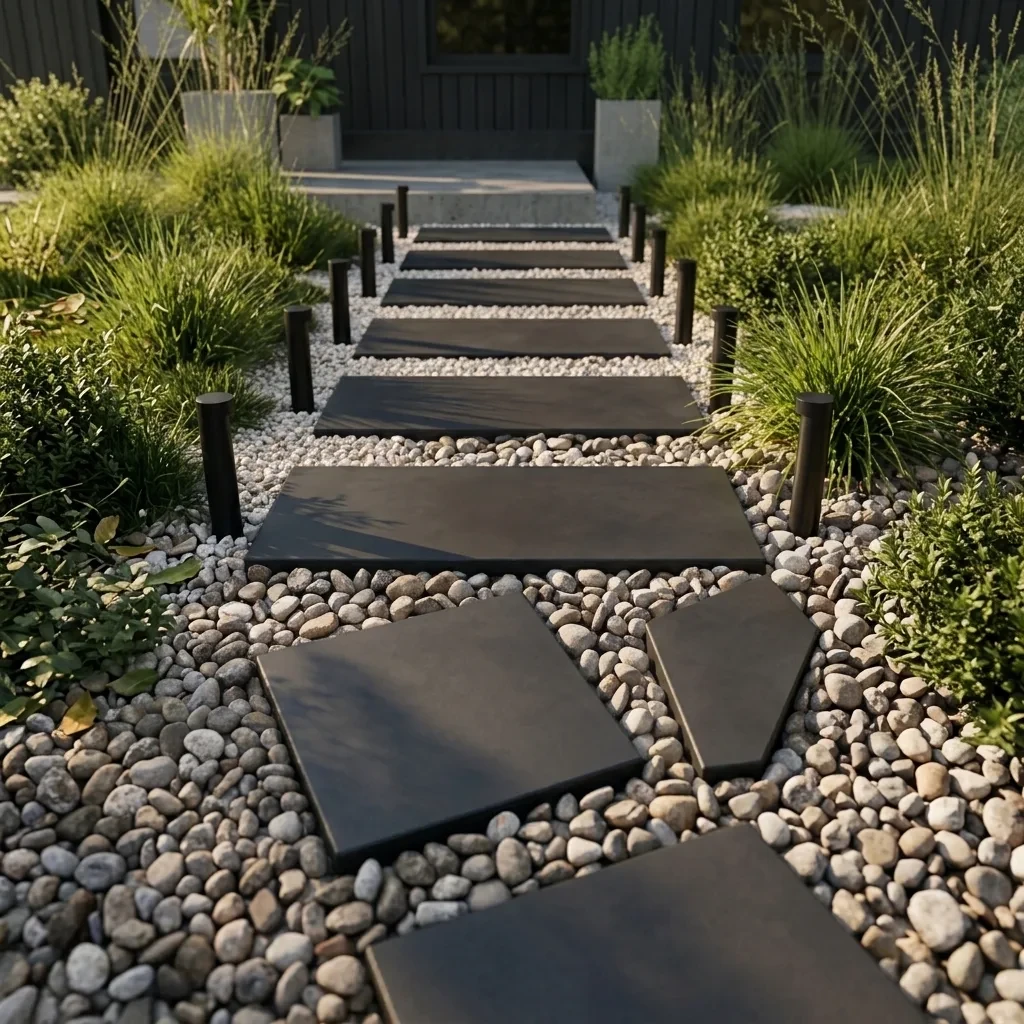
A stepping stone path is the fastest way to connect two parts of a yard, and the smallest mistake shows every time you walk it. The three decisions that matter are spacing, base and material.
Spacing that fits a normal stride
Most adults walk comfortably with 12 to 18 inches between stones, measured edge to edge, and stones large enough to put a whole foot down. Set too far apart the path becomes a hop, set too close it reads cluttered. Lay a garden hose where the path will run before cutting anything.
What goes under the stones
On lawn, a stone set directly on soil sinks and tilts within a season. Dig out the sod, add a few inches of compacted base, then bed the stone so its top sits just below the surrounding grade and the mower can pass. On pavers or gravel, stones can sit on a screeded bed.
Material and shape
Concrete pavers give clean edges and consistent sizes, natural stone gives irregular shapes and a softer look, and poured concrete pads are the cheapest way to get large, flat stones. The color should relate to the rest of the yard, not fight it.
Where they work best
Side yards, garden paths, the gap between a gate and a walkway, and edges of turf where a full patio would be overkill. Stepping stones are a poor choice for a driveway or anywhere a loaded wheelbarrow rolls.
How we quote it
Count and spacing drive the price more than the stone itself, so a rough count and the approximate walkway length are enough to start. Tell us where the path should land and we confirm the layout on site.
Want this figured out for your yard?
Tell us what you are planning and we will walk the space with you.